

Temperature measurement and control equipment

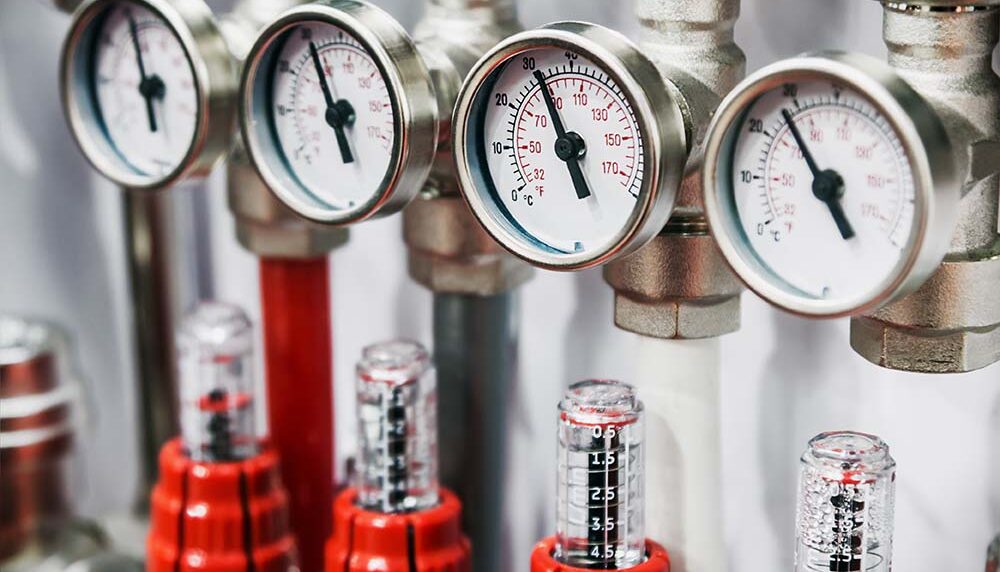
Temperature measuring equipment
Measuring, recording and temperature controllers in thermal process such as industrial furnaces, boilers and steam boilers and similar things are very important in industrial centers. The use of equipment and devices related to measuring, recording and temperature controllers in various industries is very wide and their performance accuracy is very important.
Negar Tamin engineering group is active with the aim of providing equipment used in temperature measurement processes and controllers and is ready to serve the country’s industrial centers and units requesting this product in the field of the mentioned equipment through its expert and experienced staff.
The active offices of this group in some European and Asian countries are ready to supply and procure the items used in this field at very competitive prices from famous and reliable commercial brands as soon as possible according to the inquiries received from industrial centers.
The products that can be offered are:
1- Temperature controller systems
2- Temperature measurement sensors
3- Curve stabilization systems (Recorder)
4- Monitoring (HMI)
5- Transmitters
6- Temperature gauge (hand thermometers)
7- Laser thermometers (Infrared)
8- Temperature switch
9- Temperature thermal rings
Temperature controller systems
Process control systems are usually divided into three main groups
1- ON-OFF controller systems
2- PID controller systems
3- Profile controller systems
Simple ON-OFF controls:
Simple on-off controls that activate a relay contact output based on the received input signal of the device. In these temperature controllers, there are two types of displays, one of which will display the current quantity being measured (PV) and the other will display the set quantity (SV). If the quantity being measured reaches the set quantity value, the device will issue a command to change the output state of the relay.
PID temperature controller systems:
Another type of process control system is known as PID controller. In this type of controller, based on the settings of the device, the derivative and integral will be taken from the input signal, and the output state of the controller will change according to the coefficients set in the PID section. This ability will create a very good possibility for the optimal setting of the device and control of the process under control.
Profile Controller systems:
The third type of temperature controllers are related to programmable controls, in this type of controllers, the user of the device is able to define one or more slopes of curve changes based on time. It is also possible to define different programs according to the capabilities of the controller. Some programmable controllers are able to receive several different inputs based on standard signals and create several different outputs.
Temperature gauge (hand thermometers)
1- Non-metal thermometers
The work of this thermometer is based on the reduction or increase of the length of a metal due to temperature changes. According to the feature shown in the above photo, in the temperature gauge, two metals with different longitudinal expansion coefficients are connected and form a coil. . One end of the coil is fixed and the other end is free. If the temperature changes, the free end of the coil that is connected to the hand rotates and the temperature value is indicated by the hand. Bimetal thermometers are of the contact type and are among the most widely used means of temperature measurement and are used in most devices such as iron thermostats or samovar or water heater temperature indicators.
2- Filled thermometers:
2-1- Thermometer filled with mercury
This type of thermometer works by using the mercury pressure change caused by the temperature change, that is, the change in the temperature of the thermal sensor causes the change in the pressure of the filled mercury, and thus the temperature is displayed by a needle pressure gauge that is calibrated based on the temperature. will be
.
2-2- Thermometer filled with liquid
This type of thermometer works by using the change in liquid pressure caused by the change in temperature, that is, the change in the temperature of the thermal sensor causes the change in the pressure of the filled liquid and thus the temperature is shown. The filled liquid can be alcohol, oil, etc.
2-3- Thermometer with steam pressure system mechanism
This type of thermometer contains a volatile liquid inside the thermal sensor, and the change in the temperature of the thermal sensor causes a change in the saturated vapor pressure of the filled liquid, and thus the temperature is shown.
2-4- Thermometer showing the gas pressure system
In this type of thermometer, a change in the temperature of the thermal sensor causes a change in the pressure of the filled gas, and thus the temperature is shown. The filled gas must be an inert gas such as nitrogen or helium. The most important use of filled thermometers is when the temperature probe is more than 1 meter away from the hand display. These models are called capillary or trailing, and the trail can be between 1 and 5 meters.
Important parameters in choosing a hand temperature gauge:
● Screen diameter
Temperature suffering
● Trail connection location: from below, telescopic head and from the back
● Material of body and sheath
● 5 or 10 cm or 20 cm or capillary probe (trailing length)
Temperature switch
Temperature switches or temperature thermostats are devices that can open and close a contact at certain temperatures. In general, in the industry, switches are devices that operate digitally and disconnect and connect. But sensors can measure a quantity completely and have an analog output.
Use of temperature switches (thermostats):
1. Protection of facilities and devices
2. Safety and protection for decision making
3. Communication between technical and process parts
4. Notification of the movement status of the process if it leaves the point

