

Familiarity with types of industrial milk

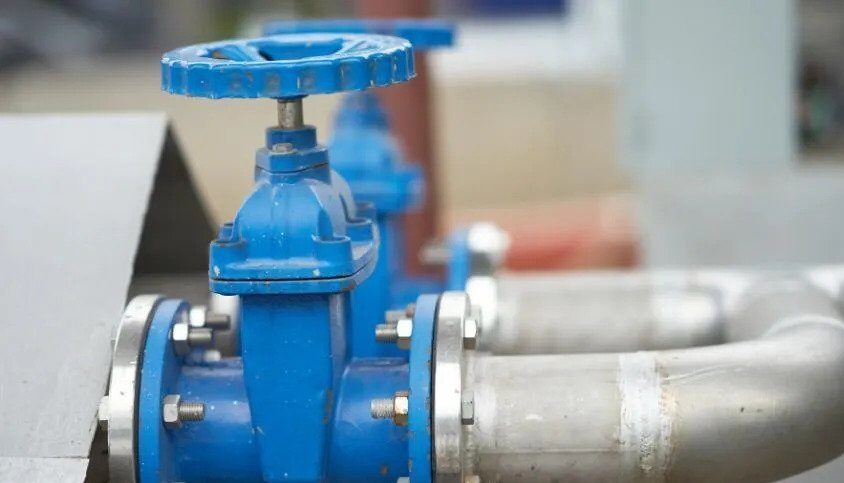
industrial milk
Industrial valves are used in systems and processes to disconnect, connect and control fluid flow. Due to the fact that industrial valves are installed in systems for different purposes, they are designed and marketed in different models. In the continuation of this article, we will first introduce the widely used industrial valves, then we will examine the advantages and disadvantages and the application of each of the mentioned models.
What is industrial milk?
Valve is one of the equipment that is used in all parts of people’s lives. For example, different types of valves are installed in the plumbing system of houses, or different valves are used to control the flow of gas in the heating system and kitchen gas, or to control the amount of water entering the dishwasher. A valve is used to regulate, cut or connect the flow of gas, liquid or any type of fluid in pipelines.
Industrial valves are used in most commercial, military, residential, transportation and organization systems. Also, these valves are used in oil and gas extraction companies, power plants, mines, chemical and petrochemical industries, sewage systems, etc.
Therefore, according to the wide application of industrial valves, various models have been designed and marketed; The most common and well-known industrial valves are:
Gate Valve or gate valve
Globe Valve or spherical valve
Ball valve or ball valve
Butterfly valve or butterfly valve
Check Valve or one-way valve
Needle valve or needle valve
Safety Valve
Solenoid valve solenoid valve
All the taps mentioned above have different models that cause differences in their features and applications. In the following, we will first introduce the valves, then we will check the advantages and disadvantages of the models.
Gate Valve or gate valve
A gate valve or gate valve is a type of valve whose disc is designed as a gate or wedge, and the disc vertically cuts off and connects the passing fluid flow. The gate valve is the most common industrial valve that is used in most factories for connecting and disconnecting.
Also read: How Vika helped develop a valve control system?
When the valve is in the open position, the disc is completely out of the way of the fluid passage; Therefore, the valve does not create any resistance for the fluid to pass, as a result, the fluid leaves the gate valve with a very small pressure drop.
A gate valve cannot usually be used to regulate fluid flow. In the semi-open state, the disc and the seat gradually erode, and the fluid passes through the valve with vibration and noise.
Application
Stopping and connecting the fluid flow of gas, diesel, fuel, steam, oil, etc.
Installable for slurry and powder fluid
Advantages
good performance
Easy maintenance
Low pressure drop
Suitable for high pressure and temperature
Disadvantages
Uninstallable for control processes
Low movement speed
Change status with high noise
Globe Valve or spherical valve
Globe valve or spherical valve is an industrial valve model with linear movement, which is used to connect and disconnect and regulate fluid flow in processes. Globe valve disc can be used to stop and connect fluid flow with full vertical movement. The design of this model is such that it has less leakage compared to the gate valve.
Application
Ball valves are usually installed in systems that require fluid flow control with low leakage.
Installation to control oil, chemical, oil, etc. fluid. with low pressure drop
Advantages
Better performance to shut off fluid flow compared to gate valve
Suitable for frequent disconnection and connection due to low friction
Easy repair
Disadvantages
Unsuitable for high pulse process
Possibility of failure at high pressures
Higher price compared to gate valve
Ball valve or ball valve
Ball valve is a quarter-round valve model that uses a ball-shaped disc to cut off and connect the fluid. When the valve is in the open position, the fluid passes through the valve without any obstruction. By turning 90 degrees by hand, the hub completely blocks the passage of fluid. One of the important advantages of ball valves is fast performance.
Application
Installation in different systems for quick connection and disconnection
Installable for gas, air, steam fluid
Suitable for high pressure and temperatures
Advantages
Ability to quickly connect and disconnect fluid with high pressure and temperature
Smaller dimensions compared to the gate valve
Various design for installation in different processes
Easy maintenance
Disadvantages
In processes with suspended particles, the particles remain in the internal components of the valve and cause erosion in the parts.
Due to rapid switching, high pressure current may be applied to the components.
Butterfly valve or butterfly valve
The butterfly valve is a quarter-round valve model that is used to connect and disconnect and control fluid flow. The butterfly valve usually blocks the passage of fluid at high speed.
Butterfly valves with large dimensions are usually installed with a gearbox. The gearbox reduces the force required to change the position of the valve and at the same time reduces the speed of the valve.
Application
Suitable for liquid fluid, slurry, gas, steam, water, sewage, etc.
Can be installed for high pressure and temperature
Advantages
Light weight compared to other models
Requires little space for installation
quick action
Low maintenance cost
Low pressure drop
Valve with non-metallic screen that can be installed in chemical processes
Disadvantages
Suitable for low pressure differences
The disk is always in the flow path
Check Valve or one-way valve
Check valve is used to prevent back flow in piping systems. The pressure of the fluid passing through the valve causes the valve to open and the reverse flow causes the valve to close.
Application
Piping system
Pump and compressor

